

Sixth Form Sports Elite students
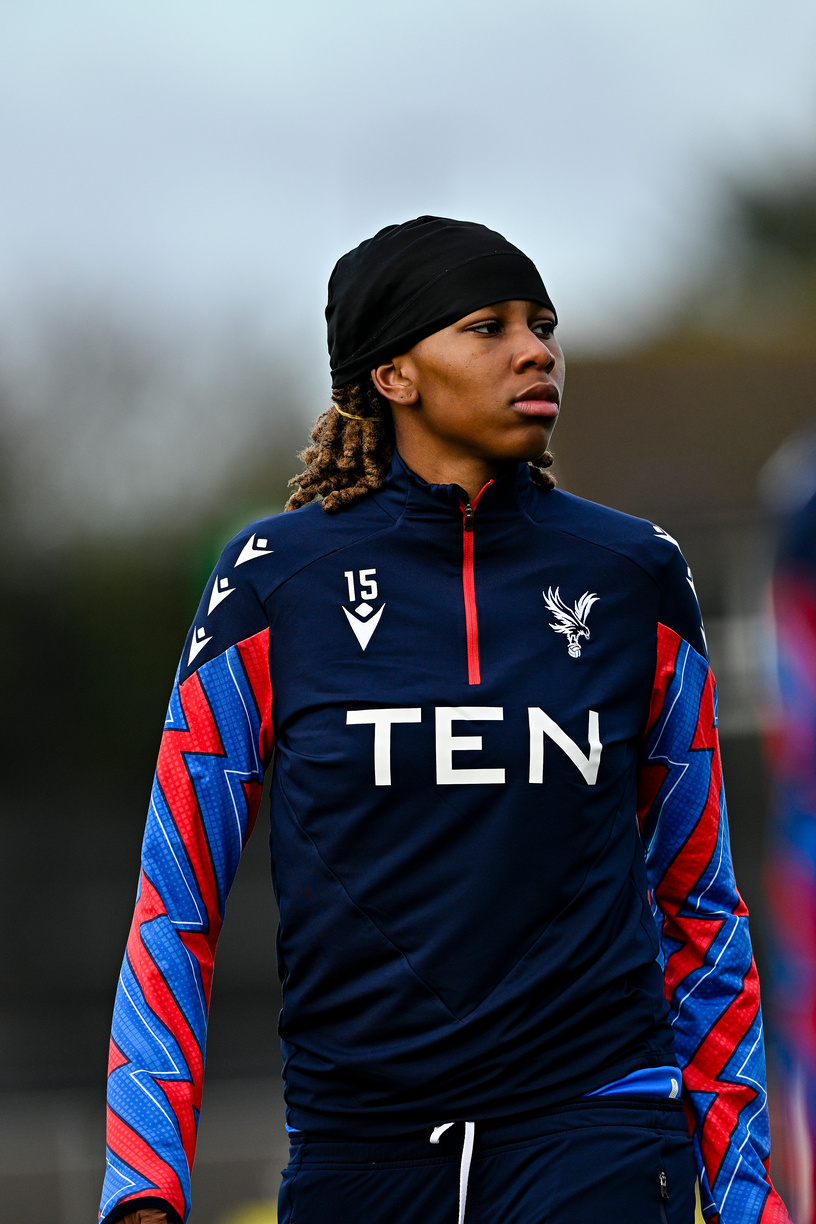
Tecla Ezeh
1.What Level are you in your Sport?
I play at the highest academy youth level in the PGA (Professional Game Academy ) U21s league, which is a league for Category 1 teams – the PGA, was introduced by The FA to focus on identifying and developing talented female players aged 14 to 20 within the Barclays Women’s Super League and Women’s Championship, to ensure they are prepared for elite-level competition.
2.What inspired you to start your Sport?
I was drawn to football because of its entertaining nature and expressive players like Eden Hazard, Neymar and Messi who made football look attractive. Playing and watching football provides deep intrinsic value and fulfilment to me as its fun and exciting.
3.What motivated you to continue with it?
I have been motivated to continue playing football as I have always aspired to be a professional footballer, playing football at the highest level with the best teams, like my role models.
4.How difficult was it to keep up academically while participating in your sport?
I have been able to maintain performance in football and keep up with academically by appropriately delegating required time to each area. Football would often require me to give up my evenings on weekdays, meaning that I would ensure most or all schoolwork would be done on weekends. Since being in the Sixth Form, I have had to learn how to use my study periods effectively, as it is imperative to finish homework during the study periods as well as having to time to revise for my 3 A Levels. Furthermore, since the start of the 2024/25 season I often have to miss a day of school, as matchdays are on a Wednesday, meaning that I catch up the missed work either before training or in the evenings, post training.
5.How do you maintain friendships inside & outside your sport?
Maintaining friendships within my sport is often easy as football is a team sport that promotes interactions and communication between each other, so team bonding is easy. However, in situations in which teammates are frustrated with one another it does become harder to control factions and division within the team. So therefore, there is a mutual understanding within the group that people make mistakes and it is our duty as teammates to encourage, rather than belittle. Maintaining friendships outside of football is harder as my leisure time is limited, so I make sure to communicate with friends online and when possible, meetup.
6.How often do you need to train?
I must train and attend football 4-5 times a week, depending on schedule of that week.
7.What does a typical training day look like?
A typical day is waking up early and finishing any extra work before school, then I attend school to have my lessons. When the school day is done, I go home and briefly recharge and then leave for training. Depending on the day of the week the focus in training differs. For example, on a Monday, I may have analysis, then gym and then a heavy load training session, often involving cardio.
8.How do you handle pressure during big competitions?
In big competitions, I handle pressure by stress management techniques like visualization, in which I mentally rehearse successful plays, such as scoring a penalty or making a perfect pass. I sometimes rely on positive self-talk to block out crowd noise and maintain focus on immediate, controllable tasks rather than the match outcome.
9.What life lessons have you learned through your sport?
Football has taught me resilience, and it also reinforces that individual talent is secondary to collective effort, demonstrating that the most ambitious goals are only achievable through discipline and trust in one's teammates.
10.What are your long-term career goals, both within and outside of sports?
In the future I would like to become a lawyer preferably through a degree apprenticeship at a firm in the Magic Circle - an elite group of five London-headquartered law firms renowned for high profitability, top-tier corporate work, and international presence - or I would like to pursue law at university. Alternatively, I would love to become a professional football player and play for Chelsea.
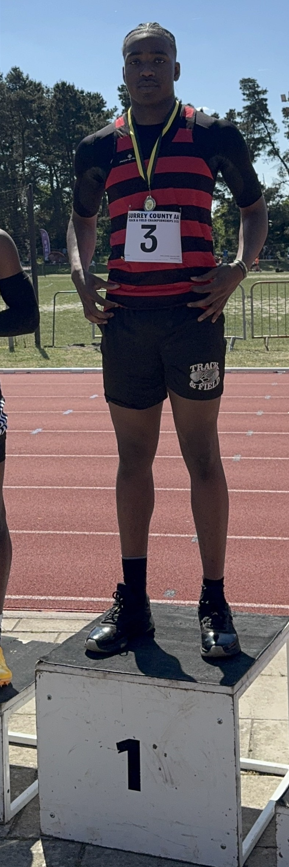
Maalik Adamson: Long Jump & 100M
1.What level are you at in your sport?
Currently I am ranked number 8th in the under 20 long jump rankings across the UK, in my second season. In my first season I was ranked 7th in the under 17 ranking.
2.What inspired you to start your sport?
What inspired me to do the sport was the fact I wanted to study in America. I found I was naturally good at long jump. Also, my family has produced two incredibly good long jumpers, my sister who is currently in America for it, and my grandad who has the junior title for long jump in Jamaica. This led to me being very interested in taking up the sport.
3.What motivated you to continue with it?
What motivated me to keep going was my hopes in studying in America, and I found that I was naturally talented, so I didn't want to waste the gift God has given me.
4.How difficult was it to keep up academically while participating in your sport?
It is very difficult to balance both sports and academics at a relatively high level. This is due to how much time and dedication it takes to keep those two things at a high standard, causing me to sacrifice a lot of time for anything else other than those two commitments.
5. How do you maintain friendships inside & outside your sport?
It is not difficult to maintain relationships made inside my sport. This is due to regular training and competitions allowing me to frequently see the friends I have made in the sport. However, maintaining friendships outside is hard due to how much time I dedicate to sport and academics. Even with the help of social media!
6.How often do you need to train?
Because I do two events (100m and Long Jump), I need to train five times a week.
7.What does a typical training day look like?
A typical training day will take two hours; each training day is different depending on what my coach needs me to work on that day. A regular long jump session will have me working on technical skill in the air and my run up, consisting of around eight to ten jumps that session. A sprint session will be circuit training to increase fitness, three sixty in sprints as warmups, harness training and three runs after, ranging from 100 to 300m.
8.How do you handle pressure during big competitions?
During competitions, to deal with pressure, I try and focus on my competition and my competition alone. What I focus on achieving is any goal I have made for yourself, or a goal based on my coach.
9.What life lessons have you learned through your sport?
I have learnt that it is not about the quantity of work you do, but about the quality. Doing enough is sometimes the way to keep moving forward and that overexerting yourself will only set you back.
10. What are your long-term career goals, both within and outside of sports?
My long-term goals are to become an Olympian and study finance in America and start my own investment banking firm.